Watershed Association: Where The Buffalo Return: The People Will Follow A living lesson in visionary leadership and land stewardship
by Amber Smith
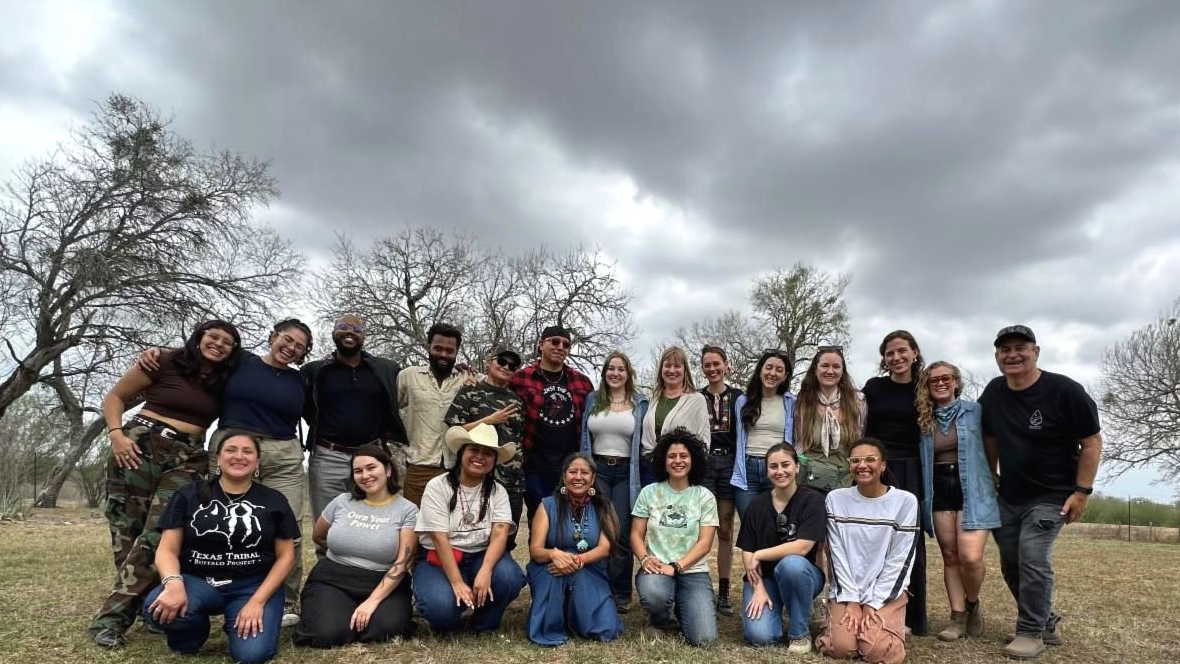
In March of 2025, the Watershed Association partnered with the One Village Project to bring the Emerging Visionary Incubator to Texas, convening 22 environmental leaders around a shared commitment to stewarding and protecting our natural world.
In the year since, we have continued to walk alongside the cohort through a Post Incubator Program, supporting both their leadership development and the implementation of their Visionary Projects. This March, we had the privilege of visiting the Texas Tribal Buffalo Project together. As part of this ongoing journey, we intentionally connect Visionaries with regional leaders and projects, offering a window into the broader network of people working to steward land, community, and future across Central Texas.
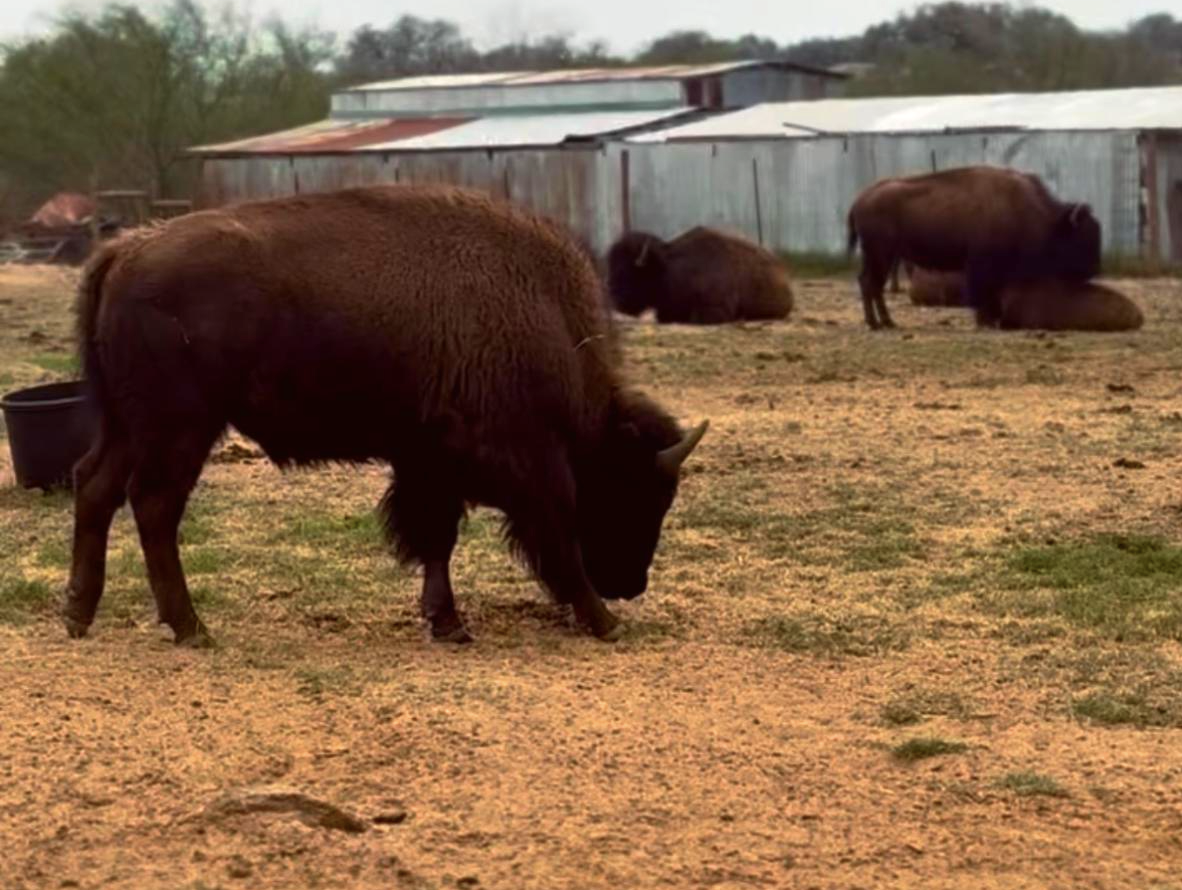
We learned from the Texas Tribal Buffalo Project that buffalo carry ancient wisdom, and that their presence is a living reminder of the power of keeping that story alive.
They offered us reflections of connection, resilience, strength, and community. Buffalo walk into the storm, literally, not metaphorically, teaching us not to run from it, but to move through it. There is a grounded strength to them, one that is not spoken, but felt. As if they remember something we have forgotten. As if they had walked through centuries and never needed to explain themselves.
For many Indigenous cultures, buffalo are sacred symbols of life, abundance, and reciprocity. Everything they give, meat, hide, bone, sustains life. There is a quiet generosity in their existence.
The Buffalo as Teacher
Charles Bush, Education & Curriculum Coordinator for the Texas Tribal Buffalo Project, introduced us to a concept he returns to often: the buffalo as ecological and cultural engineer.
As they move across the land, buffalo aerate soil, fertilize it, and replant native grasses, quietly sustaining entire ecosystems. A keystone species, its presence once shaped the health of this continent. When buffalo were nearly exterminated in the 19th century, it was not only a cultural loss, but an ecological one. Many of the environmental challenges we face today trace back to that absence.
The Texas Tribal Buffalo Project is rekindling a living system. Through careful land stewardship and restoration, they are reimagining what this landscape once was, and what it could be again. Their vision reaches far beyond a single place: a buffalo corridor stretching from Canada to Mexico, reconnecting Indigenous-managed lands and restoring ancient relationships.
“The buffalo faces the storm head-on,” Charles shared. “That’s what I try to remember, especially when I think about what my ancestors endured so that I could be standing here today.”
The Seed That Became a Herd
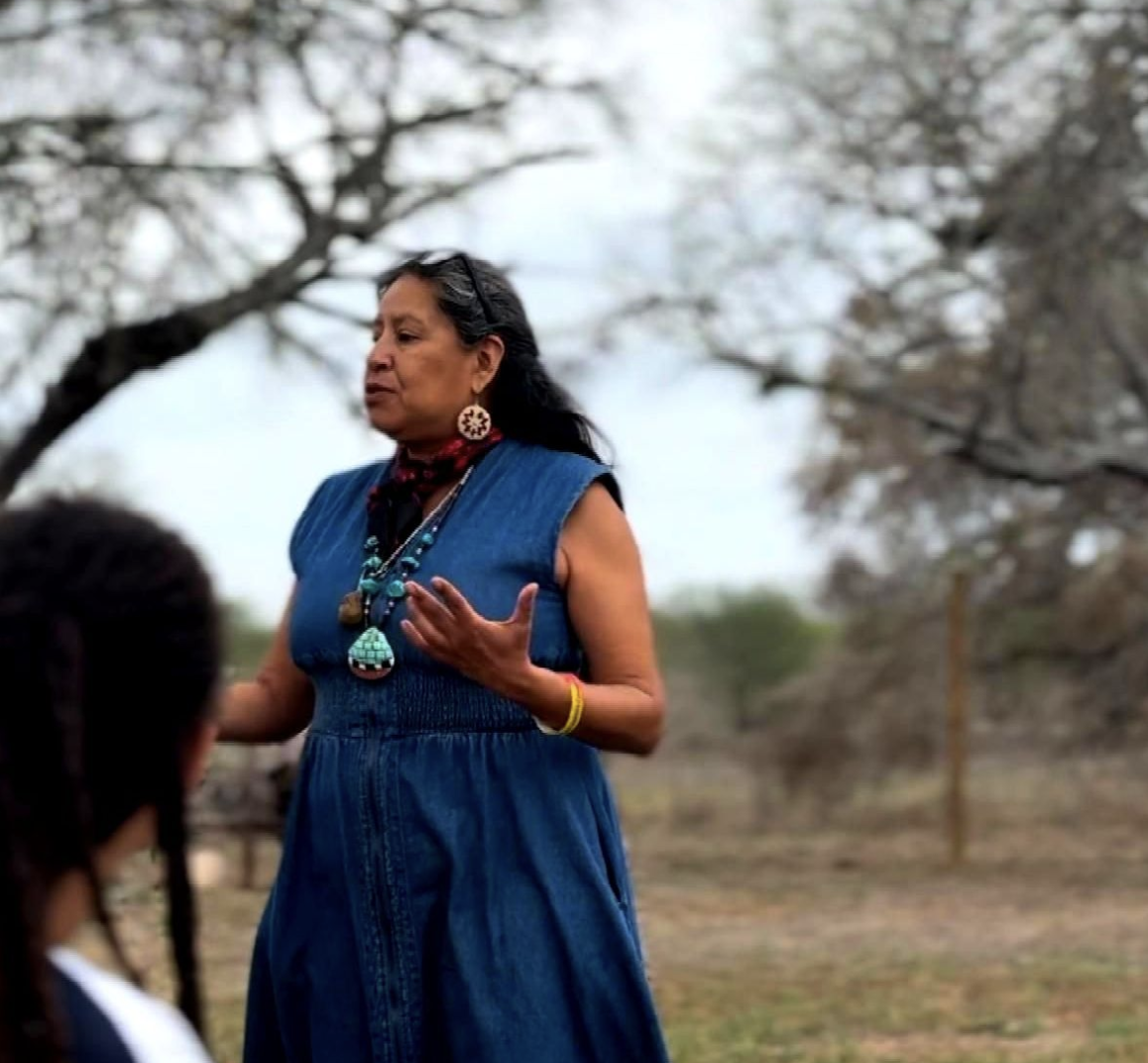
Lucille Contreras, CEO and founder of the Texas Tribal Buffalo Project, is a San Antonio-born artist, educator, and Texas Indigenous descendant. She spent decades navigating identity and erasure before returning fully to both her roots and her homeland.
She grew up in a household where Apache heritage was kept secret. “Being Apache during that time was like having a target on your back,” she shared. Her father never told her, and she grew up feeling, in her words, “misplaced and displaced,” not quite knowing what was missing. It was not until later, after being asked again and again, “What tribe are you from?” that she began searching for those answers herself. When her father finally spoke, it stayed with her: “My mother told me we are Apache. But never, ever tell anyone.”
Years later, while living on the Pine Ridge Reservation, she encountered the buffalo in a new way, not just as an animal, but as a relative. That understanding became a guiding principle for her work.
"Take care of the soil.
Take care of the grass.
Take care of the four-legged.
And you are taken care of in return."
The Visionary Incubator Program exists to cultivate leaders who can see these connections, who can hold water rights, food sovereignty, land restoration, and Indigenous stewardship not as separate issues, but as expressions of a single, indivisible relationship with a living earth.
This field visit was a reminder of why that matters, and what it looks like when someone has the courage to live it fully. Thank you to the Texas Tribal Buffalo Project for sharing your ancient wisdom with us.